太元末年,建康
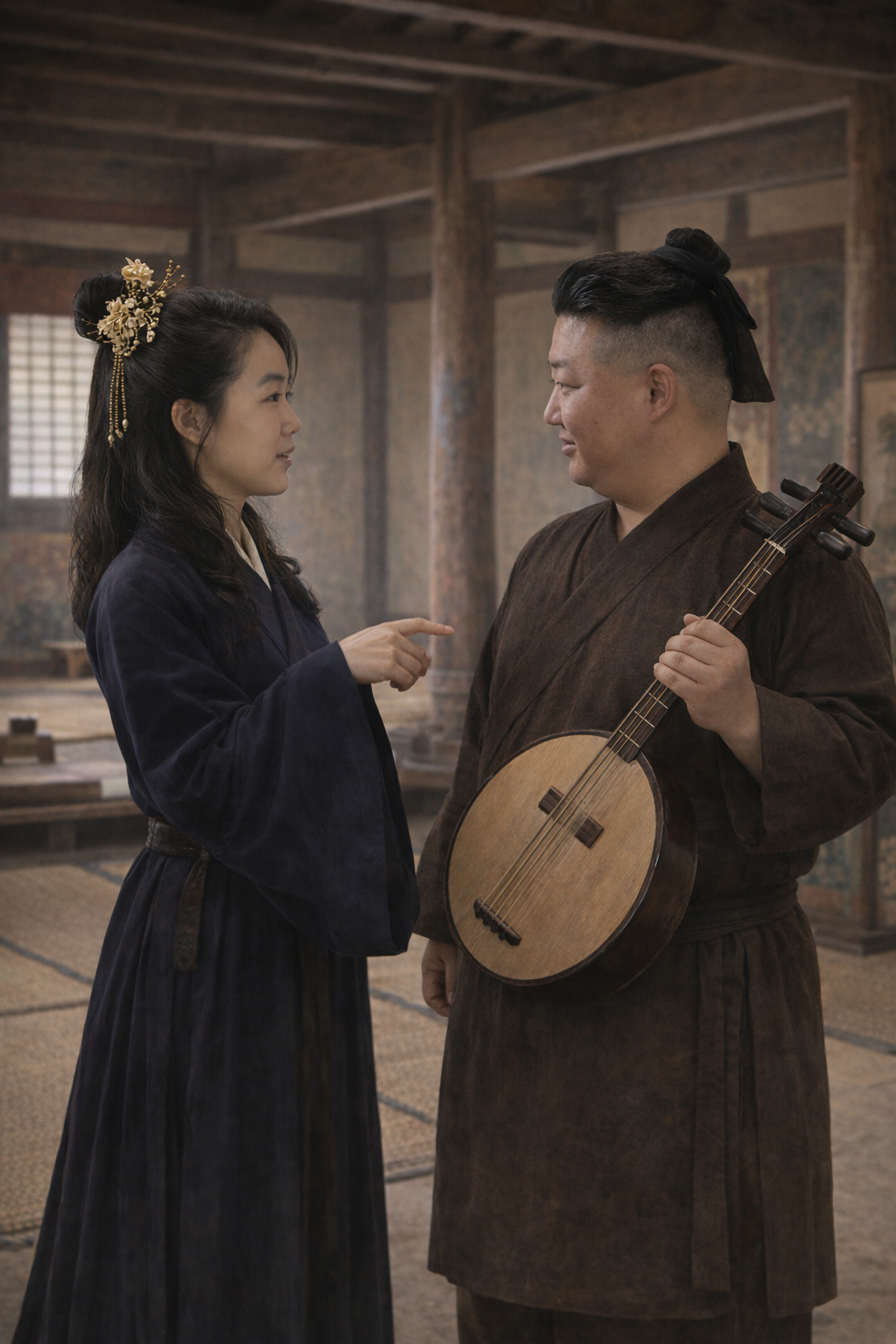
太元末年,建康。谢伯玉与王季安相对而立,季安怀抱阮咸,轻拨四弦试音。伯玉侧耳倾听,忽而笑道:“这曲子若再慢三拍,听的人都要睡着了。“季安也不恼,反手又拨了一个和弦:“慢有慢的妙处,你懂什么。“两人就这么站着,一个拨弦一个挑刺,谁也不让谁。檐下的陶灯烛火跳了两跳,远处传来一声犬吠。
考据映射 · 8 条
- 西装(深色)MODERN大袖衫(深色交领)● 强证据
交领右衽宽袖长衫,袖宽可达50-60厘米,袖长过手20-30厘米,衣长及膝或过膝。多用葛布、细麻布或丝绸制成,不束腰带,任其自然下垂。
《释名》载“衫,檀也,无袵裾也”,魏晋士族日常服
来源:- 文献:南朝·刘义庆《世说新语·容止》 - 图像:东晋·顾恺之《洛神赋图》(宋摹本) - 文献:南朝·萧统《文选·赋》查看图景 → - 西装(黑色)MODERN褶(交领窄袖短袍)● 强证据
《晋书·舆服志》载褶为日常便服,北朝尤盛
- 长发(女性现代发型)MODERN飞天髻 + 步摇● 强证据
将头发绾于头顶成数个高耸的环形髻,或单环、或三环、或五环并立,髻尖向前倾斜,形似凌空飞举。常见于南朝贵族仕女和神女题材画作。
辽宁北票北燕冯素弗墓出土金步摇冠实物
来源:- 图像:东晋·顾恺之《洛神赋图》 - 文献:南朝·宋·何承天《采兰杂志》 - 文献:五代·马缟《中华古今注·冠子朵子扇子》查看图景 → - 短发(男性现代发型)MODERN束髻 + 幅巾● 强证据
长方形丝绸或细麻布巾,长约1.5米,宽约40厘米,缠绕于头部后在额前或脑后打结,两端自然下垂或插入巾内。
《世说新语》”王夷甫幅巾”,魏晋名士标志
来源:- 文献:晋·房玄龄等《晋书·舆服志》 - 文献:南朝·刘义庆《世说新语·雅量》 - 图像:东晋·顾恺之《洛神赋图》查看图景 → - 长号MODERN阮咸(直颈圆形拨弦乐器)● 强证据
直颈圆形音箱拨弦乐器,竹林七贤之阮咸善弹此琴,故名。琴身圆形(直径 30-40 厘米),直颈(长 50-60 厘米),四弦,十二柱。拨弹或指弹。唐代方改称"阮"。
南京西善桥南朝墓砖画阮咸抱弹直颈琴
来源:- 图像:南京西善桥南朝墓《竹林七贤与荣启期》砖画 - 文献:唐·房玄龄等《晋书·阮咸传》 - 文献:汉·应劭《风俗通义·声音》查看图景 → - 室内LED照明MODERN陶灯(豆形油灯)● 强证据
陶土烧制的油灯,结构为"豆形"——下有圈足,中有柱(灯杆),上为敞口浅盘(盛油与灯芯)。高约 15-30 厘米,盘径 8-12 厘米。灯油为植物油(麻油、桐油)或动物脂。灯芯用麻线、蒲心。青瓷灯至南朝尤精美。
江苏南京象山东晋墓出土青瓷灯多件
来源:- 实物:江苏南京象山东晋王兴之墓出土青瓷灯(南京博物院藏) - 实物:安徽马鞍山朱然墓出土青瓷灯 - 文献:南朝·刘义庆《世说新语·夙惠》查看图景 → - 现代建筑室内MODERN厅堂(木柱梁架 + 夯土地)● 强证据
居住建筑的主室,宽约 6-10 米、进深 4-6 米、高约 3-4 米。木柱支撑梁架,地面为夯土或铺方砖。正面有阶 1-3 级,正间开敞或有竹帘、布幔。北墙常设主位(主人[[矮榻]]),东西两侧设宾位。地铺茵席,案几按尊卑排列。
嘉峪关魏晋五号墓画像砖“宴饮图“可见厅堂形制
来源:- 图像:甘肃嘉峪关新城魏晋五号墓画像砖"宴饮图" - 图像:山西大同司马金龙墓北魏壁画 - 文献:南朝·刘义庆《世说新语·德行》《任诞》(大量厅堂场景)查看图景 → - 现代乐器店背景MODERN乐肆(市集乐器行)◐ 推断
《洛阳伽蓝记》载洛阳大市分肆,乐器归“乐肆”
▸ Trace 时间线 · 14 条
▸ 图像编辑 prompt · 2344 字
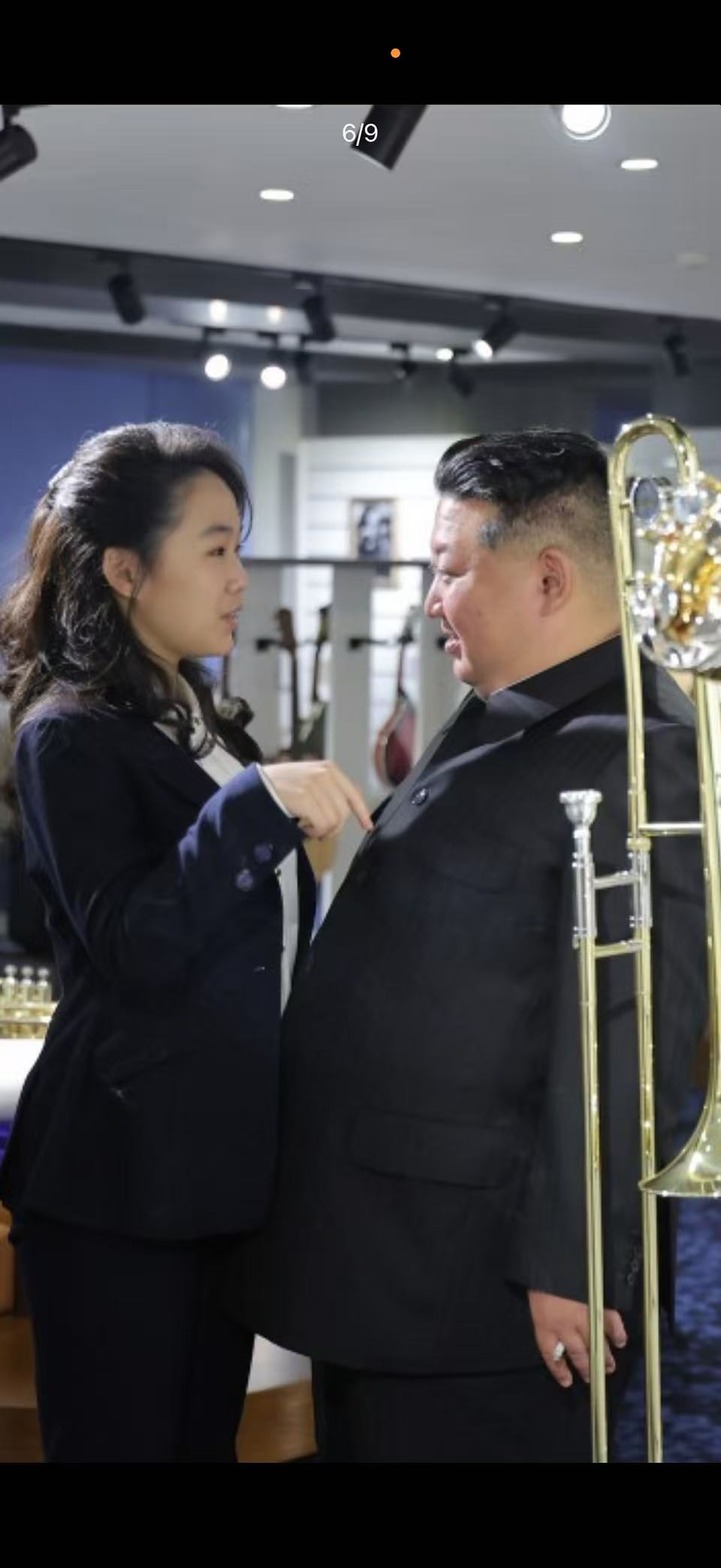
Photo-realistic documentary photo (Canon 5D, 85mm, natural daylight). Edit the first input image. PRESERVE: identical face per person (same identity, eyes, nose, mouth, skin — NEVER replace with AI face), exact body pose (both standing upright unchanged), facing direction (person on screen-left facing screen-right, person on screen-right facing screen-left), screen-left/right positions (viewer perspective), hand gestures, camera framing. Modify only clothing, hair, objects, background.

PERSON ON SCREEN-LEFT (orig: dark suit, long hair) → REMOVE modern suit; clothing: Wei-Jin cross-collar wide-sleeve robe (daxiushan) in deep indigo silk, floor-length with natural drape, wide sleeves 40-50cm, belted at waist with dark leather gedai, NOT modern suit NOT Tang round-collar; hair: tall coiled bun (feitian ji) crowned with gold buyao hairpin with trembling flowers and jade beads, black hair, NOT modern loose hair; stands as input.

PERSON ON SCREEN-RIGHT (orig: black suit, short hair, holding trombone) → REMOVE modern suit and trombone; clothing: Wei-Jin cross-collar narrow-sleeve short robe (zhe) in dark brown hemp, knee-length with fitted sleeves, simple cloth belt, NOT modern suit; hair: topknot wrapped with dark cloth headband (fujin), black hair tied high, NOT modern short cut; holds round-bodied long-necked lute (ruanxian) 30-40cm diameter circular wooden soundbox with straight neck and four strings across chest, natural wood or black lacquer, NOT trombone NOT modern instrument; stands as input.

Background: traditional Wei-Jin interior hall (tingtang), timber pillars with exposed beam ceiling, tamped earth floor, woven floor mats, low wooden platforms, paper-lattice windows, ink-painted folding screens, mineral pigment colors (vermilion, indigo, ochre, deep green) where appropriate. Remove: neon, LED, modern furniture, chairs, English/simplified text, modern logos, posters, modern instrument displays. Style: photo-realistic, NOT painting/illustration/anime/ink-wash. Wei Jin (220-589 AD) ONLY. CRITICAL: NO chairs/stools/benches/sofas (sit on woven mat or huchuang only); NO post-Wei-Jin hair (NO Tang high buns, Song parted, Qing braid, modern short cuts); NO Tang/Song/Ming/Qing/Japanese/Korean styles; NO cotton, folding fans, blue-white porcelain, eyeglasses, watches, modern instruments. Faces unchanged.
▸ Claude 原始返回 · 5060 字
```json
{
  "scene_recognition": {
    "scene_type": "室内对话",
    "people_count": 2,
    "modern_elements": [
      {"name": "西装", "category": "服饰"},
      {"name": "长发(现代发型)", "category": "首服/发型"},
      {"name": "短发(现代发型)", "category": "首服/发型"},
      {"name": "长号", "category": "器物工具"},
      {"name": "室内LED照明", "category": "照明"},
      {"name": "现代建筑室内", "category": "空间场景"},
      {"name": "现代乐器店背景", "category": "空间场景"}
    ]
  },
  "mappings": [
    {
      "modern": "西装(深色)",
      "ancient": "大袖衫(深色交领)",
      "category": "服饰",
      "rationale": "《释名》载"衫,檀也,无袵裾也",魏晋士族日常服",
      "evidence_strength": "●",
      "wiki_ref": "[[大袖衫]]",
      "atlas_ref": "09_sunwei_gaoyitu"
    },
    {
      "modern": "西装(黑色)",
      "ancient": "褶(交领窄袖短袍)",
      "category": "服饰",
      "rationale": "《晋书·舆服志》载褶为日常便服,北朝尤盛",
      "evidence_strength": "●",
      "wiki_ref": "[[褶]]",
      "atlas_ref": "xhs01_p04_kuzhe_guanyuan"
    },
    {
      "modern": "长发(女性现代发型)",
      "ancient": "飞天髻 + 步摇",
      "category": "首服/发型",
      "rationale": "辽宁北票北燕冯素弗墓出土金步摇冠实物",
      "evidence_strength": "●",
      "wiki_ref": "[[高髻步摇]]",
      "atlas_ref": "19_xuxianxiu_mural_2"
    },
    {
      "modern": "短发(男性现代发型)",
      "ancient": "束髻 + 幅巾",
      "category": "首服/发型",
      "rationale": "《世说新语》"王夷甫幅巾",魏晋名士标志",
      "evidence_strength": "●",
      "wiki_ref": "[[幅巾]]",
      "atlas_ref": "10_zhulinqixian_zhuanhua"
    },
    {
      "modern": "长号",
      "ancient": "阮咸(直颈圆形拨弦乐器)",
      "category": "器物工具",
      "rationale": "南京西善桥南朝墓砖画阮咸抱弹直颈琴",
      "evidence_strength": "●",
      "wiki_ref": "[[阮咸]]",
      "atlas_ref": "10_zhulinqixian_zhuanhua"
    },
    {
      "modern": "室内LED照明",
      "ancient": "陶灯(豆形油灯)",
      "category": "照明",
      "rationale": "江苏南京象山东晋墓出土青瓷灯多件",
      "evidence_strength": "●",
      "wiki_ref": "[[陶灯]]",
      "atlas_ref": "51_dongjin_niuxing_deng"
    },
    {
      "modern": "现代建筑室内",
      "ancient": "厅堂(木柱梁架 + 夯土地)",
      "category": "空间场景",
      "rationale": "嘉峪关魏晋五号墓画像砖"宴饮图"可见厅堂形制",
      "evidence_strength": "●",
      "wiki_ref": "[[厅堂]]",
      "atlas_ref": "32_jiayuguan_brick_paochu_3ren"
    },
    {
      "modern": "现代乐器店背景",
      "ancient": "乐肆(市集乐器行)",
      "category": "空间场景",
      "rationale": "《洛阳伽蓝记》载洛阳大市分肆,乐器归"乐肆"",
      "evidence_strength": "◐",
      "wiki_ref": "[[西市东市]]",
      "atlas_ref": ""
    }
  ],
  "edit_prompt": "Photo-realistic documentary photo (Canon 5D, 85mm, natural daylight). Edit the first input image. PRESERVE: identical face per person (same identity, eyes, nose, mouth, skin — NEVER replace with AI face), exact body pose (both standing upright unchanged), facing direction (person on screen-left facing screen-right, person on screen-right facing screen-left), screen-left/right positions (viewer perspective), hand gestures, camera framing. Modify only clothing, hair, objects, background.\n\nPERSON ON SCREEN-LEFT (orig: dark suit, long hair) → REMOVE modern suit; clothing: Wei-Jin cross-collar wide-sleeve robe (daxiushan) in deep indigo silk, floor-length with natural drape, wide sleeves 40-50cm, belted at waist with dark leather gedai, NOT modern suit NOT Tang round-collar; hair: tall coiled bun (feitian ji) crowned with gold buyao hairpin with trembling flowers and jade beads, black hair, NOT modern loose hair; stands as input.\n\nPERSON ON SCREEN-RIGHT (orig: black suit, short hair, holding trombone) → REMOVE modern suit and trombone; clothing: Wei-Jin cross-collar narrow-sleeve short robe (zhe) in dark brown hemp, knee-length with fitted sleeves, simple cloth belt, NOT modern suit; hair: topknot wrapped with dark cloth headband (fujin), black hair tied high, NOT modern short cut; holds round-bodied long-necked lute (ruanxian) 30-40cm diameter circular wooden soundbox with straight neck and four strings across chest, natural wood or black lacquer, NOT trombone NOT modern instrument; stands as input.\n\nBackground: traditional Wei-Jin interior hall (tingtang), timber pillars with exposed beam ceiling, tamped earth floor, woven floor mats, low wooden platforms, paper-lattice windows, ink-painted folding screens, mineral pigment colors (vermilion, indigo, ochre, deep green) where appropriate. Remove: neon, LED, modern furniture, chairs, English/simplified text, modern logos, posters, modern instrument displays. Style: photo-realistic, NOT painting/illustration/anime/ink-wash. Wei Jin (220-589 AD) ONLY. CRITICAL: NO chairs/stools/benches/sofas (sit on woven mat or huchuang only); NO post-Wei-Jin hair (NO Tang high buns, Song parted, Qing braid, modern short cuts); NO Tang/Song/Ming/Qing/Japanese/Korean styles; NO cotton, folding fans, blue-white porcelain, eyeglasses, watches, modern instruments. Faces unchanged.",
  "scene_narrative": {
    "text": "太元末年,建康。谢伯玉与王季安相对而立,季安怀抱阮咸,轻拨四弦试音。伯玉侧耳倾听,忽而笑道:"这曲子若再慢三拍,听的人都要睡着了。"季安也不恼,反手又拨了一个和弦:"慢有慢的妙处,你懂什么。"两人就这么站着,一个拨弦一个挑刺,谁也不让谁。檐下的陶灯烛火跳了两跳,远处传来一声犬吠。",
    "character_names": ["谢伯玉", "王季安"],
    "era_setting": "太元末年,建康",
    "objects_mentioned": ["阮咸", "陶灯", "烛火"]
  }
}
```