← 返回存照阁
20260419_175749文人户外工作1 人
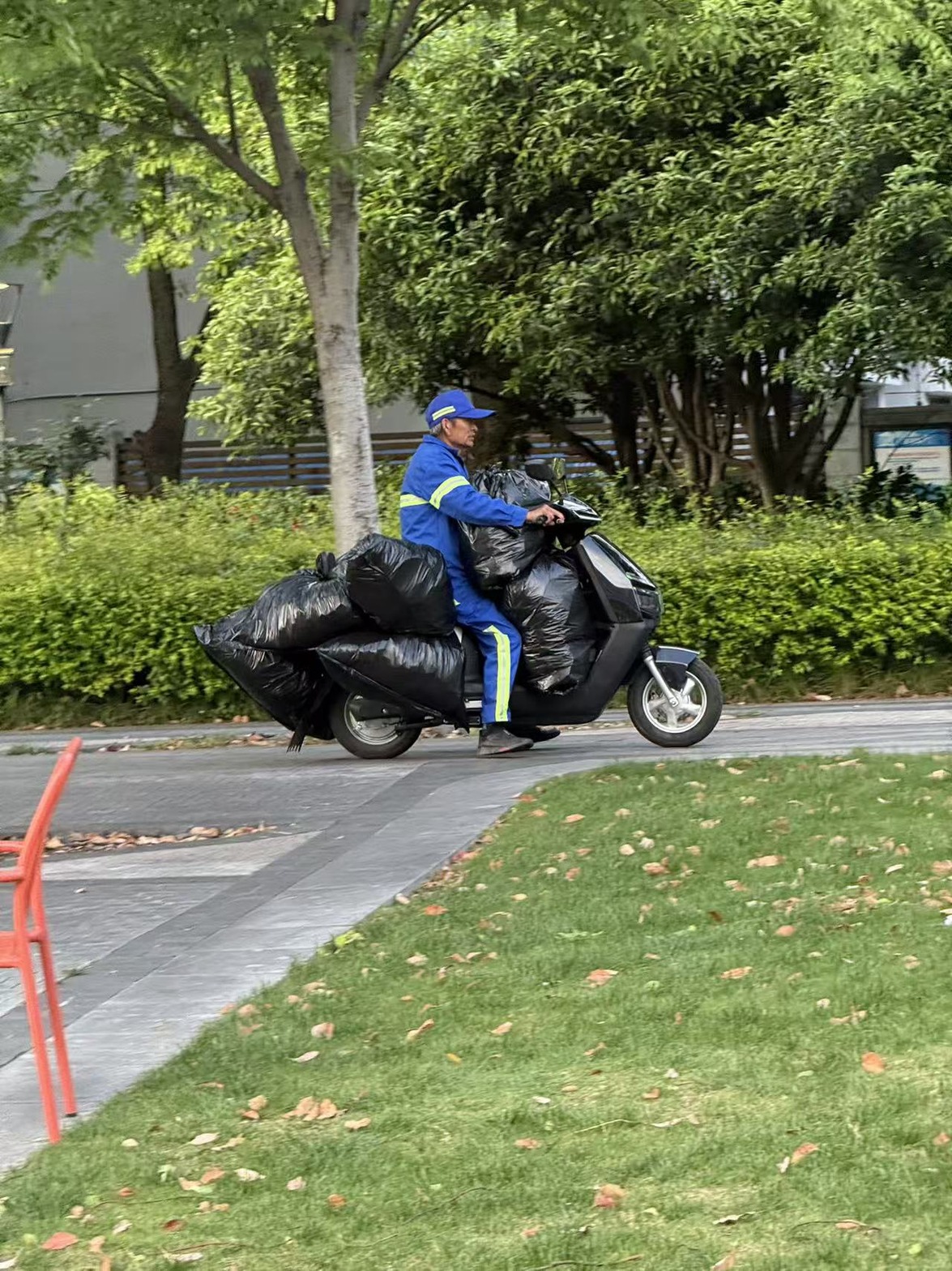
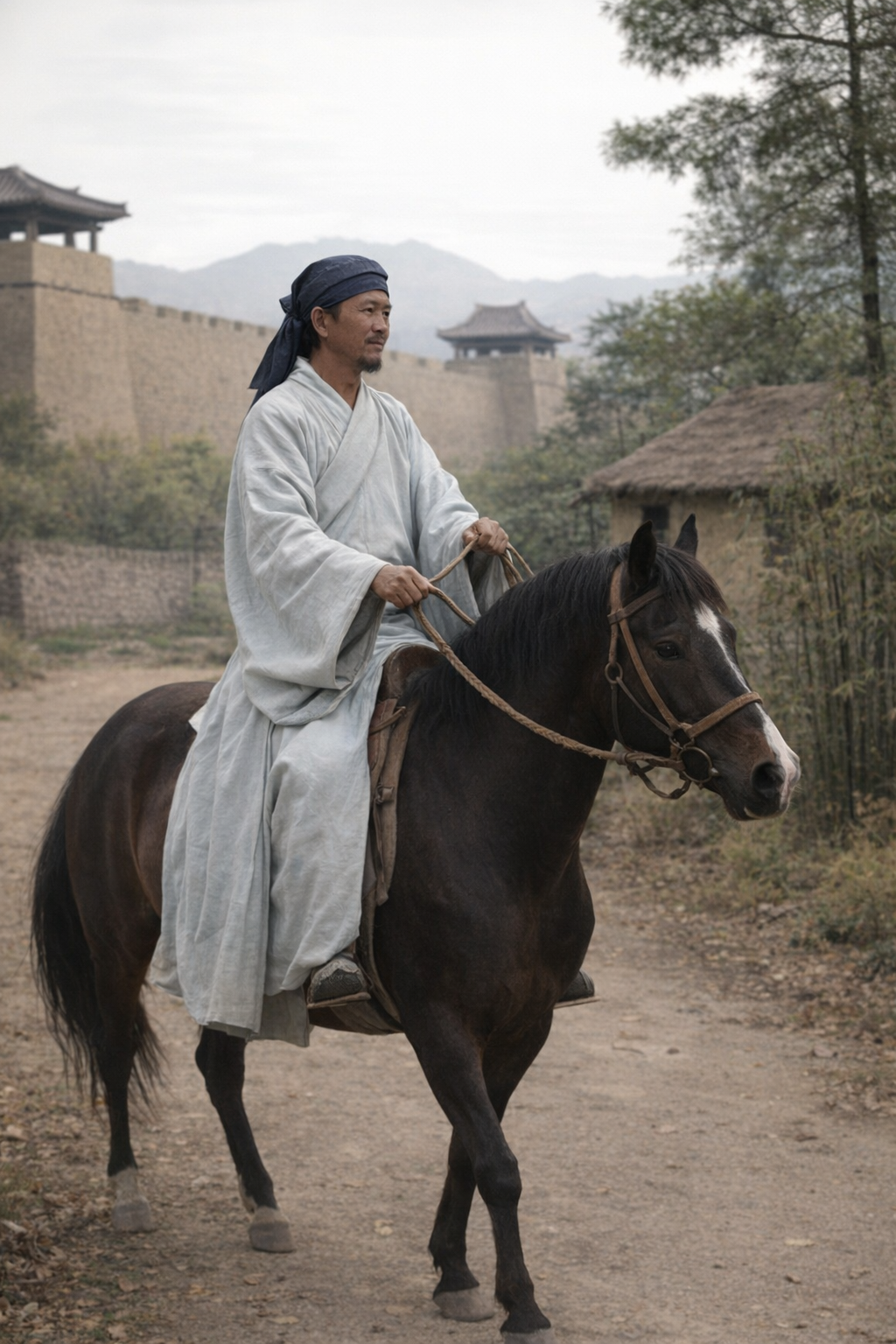
建安末年,河内郡
建安末年,河内郡。王叔明策马行于官道,腰间布囊鼓鼓,里头装的是新抄的《庄子》三卷。道旁竹林深深,远处坞堡高墙隐约可见。他侧头望向前方,喃喃道:“今日若能赶到驿亭,便可歇脚了。“马蹄踏过落叶,发出细碎的沙沙声。风吹过,幅巾的两端微微飘起。
王叔明
考据映射 · 8 条
- 电动摩托车MODERN骏马● 强证据
骑乘用的马匹,高 130-145 厘米肩高,魏晋北方多骑河曲马、凉州马(体型较大),南方多用矮种马。鞍桥较低(区别唐代高鞍桥),马镫北朝晚期才出现(早期多无镫或只有上马用单镫)。装备包括木或皮鞍、丝绳或皮革缰辔、青铜或铁马衔。
魏晋骑马为文人士族常见出行方式,嘉峪关画像砖可见
来源:- 实物:甘肃武威雷台"马踏飞燕"铜奔马 - 图像:甘肃嘉峪关新城魏晋六号墓画像砖"出行图" - 实物:辽宁朝阳十二台北燕墓马鞍具查看图景 → - 蓝色制服MODERN大袖衫● 强证据
交领右衽宽袖长衫,袖宽可达50-60厘米,袖长过手20-30厘米,衣长及膝或过膝。多用葛布、细麻布或丝绸制成,不束腰带,任其自然下垂。
魏晋文人标志服,《洛神赋图》清晰描绘形制
来源:- 文献:南朝·刘义庆《世说新语·容止》 - 图像:东晋·顾恺之《洛神赋图》(宋摹本) - 文献:南朝·萧统《文选·赋》查看图景 → - 蓝色帽子MODERN幅巾● 强证据
长方形丝绸或细麻布巾,长约1.5米,宽约40厘米,缠绕于头部后在额前或脑后打结,两端自然下垂或插入巾内。
《晋书·舆服志》载魏晋名士多以幅巾为雅
来源:- 文献:晋·房玄龄等《晋书·舆服志》 - 文献:南朝·刘义庆《世说新语·雅量》 - 图像:东晋·顾恺之《洛神赋图》查看图景 → - 黑色垃圾袋MODERN布囊● 强证据
魏晋出行携物用布囊或竹筒,《世说新语》多处提及
- 现代道路MODERN官道● 强证据
魏晋驿传制度延续,《晋书·职官志》载邮驿之官
- 现代建筑MODERN坞堡● 强证据
豪族防御性庄园建筑群,由高墙环绕多座房屋构成。外墙高 5-8 米,夯土或土坯砌筑,四角设望楼("角楼")。墙内有主人居住的厅堂、子弟学舍、奴仆居所、仓库、厩舍、水井,甚至手工作坊。规模大者达数里,小者百步方圆。是三国至南北朝战乱年代豪族庇护族人的核心居所。
魏晋豪族防御性庄园,嘉峪关画像砖可见
来源:- 图像:内蒙古和林格尔东汉晚期壁画墓"庄园图"(延续至魏晋) - 文献:唐·房玄龄等《晋书·祖逖传》 - 图像:甘肃嘉峪关新城魏晋六号墓画像砖"坞堡图"查看图景 → - 草坪MODERN草庐旁草地● 强证据
隐士或文人隐居山野时居住的简陋小屋。茅草或芦苇覆屋顶,木架结构,墙用土坯或竹编。一般 1-3 间,每间约 3×3 米,屋高约 2.5 米。四周多植竹、桑、松,前有清泉、石径。
陶渊明《归去来兮辞》描写田园草庐周围环境
来源:- 文献:东晋·陶渊明《归去来兮辞》《桃花源记》 - 文献:三国蜀·诸葛亮《出师表》"臣本布衣……苟全性命于乱世" - 图像:甘肃敦煌莫高窟第 285 窟西魏壁画山居图查看图景 → - 现代树木MODERN竹林● 强证据
魏晋文人隐逸符号,竹林七贤砖画可证
▸ Trace 时间线 · 14 条
00pipeline_start {"role":"文人","image":"/private/var/folders/23/vxj0j_p11l7g79b64wnz84wc0000gn/T/gradio/0feaf6bbd19416c286ebd0e42c78a06a64f38274f97227e26ecd84be72997056/96e6ece4614ef305861da6e2c7449e5a.jpg"}
01image_normalized {"path":"/Users/chen/Documents/GitHub/yijianrugu/outputs/runs/20260419_175749/original.jpg"}
02agent_call_start
03kb_loading
04kb_loaded {"size_kb":86}
05scene_vision_start
06scene_vision_done {"anchors":3,"consistency":"OK","people":1}
07llm_call_start {"model":"anthropic/claude-sonnet-4.5","ctx_kb":86}
08llm_call_done {"length":7811}
09forbidden_warning ["中文禁词命中:明","中文禁词命中:清","英文禁词命中:kimono","英文禁词命中:hanbok","英文禁词命中:japanese","英文禁词命中:korean"]
10agent_done {"mappings_count":8,"narrative_len":118}
11image_edit_start {"prompt_len":5129,"n":1}
12image_edit_done {"provider":"openai","n_variants":1,"references_used":["visual_atlas/artifacts/14_qingci_jishouhu.jpg","visual_atlas/artifacts/15_qi_erbei.jpg","visual_atlas/artifacts/16_xijin_qingci_dushu_yong.jpg"],"prompt_len":5129,"out_count":1}
13pipeline_done {"success":true,"ancient_count":1,"narrative_len":118,"mappings_count":8}
▸ 图像编辑 prompt · 5134 字
Photo-realistic documentary photograph, shot on Canon 5D with 85mm f/1.4 lens, natural daylight, shallow depth of field, sharp focus on faces. Edit the first input image with strict identity preservation.

🔒 FACE IDENTITY LOCK (MOST CRITICAL):
- Each person's face must remain IDENTICAL to the input image: same face shape, same eye shape and position, same nose shape, same mouth shape, same skin tone, same jaw line. The viewer must instantly recognize the same individuals.
- You MAY ADD period-appropriate features: a Wei-Jin style beard or mustache for adult male scholars/officials (sparse, well-groomed); traditional makeup for female roles (subtle eyebrow drawing, light lip color, light face powder).
- You MUST NOT change: face proportions, eye color, nose bridge, lip shape, age appearance, ethnicity, fundamental facial structure.
- 🚨 NEVER replace the original face with a generic or AI-imagined face. Use the input image faces as the unchangeable identity anchor.

🔒 STANCE / POSE / COMPOSITION LOCK:
- Preserve the EXACT body pose from input (riding scooter = riding horse). Do NOT convert one to another.
- Preserve the EXACT facing direction from input (facing screen-right). Do NOT rotate the figures.
- Preserve relative positioning (screen-center).
- Preserve hand gestures — only the held object is replaced (handlebars → horse reins).
- Camera angle, distance, framing identical to input.

🔒 SCREEN-LEFT / SCREEN-RIGHT (VIEWER PERSPECTIVE):
- Every directional word (screen-left, screen-right) refers to the VIEWER's perspective — the side of the frame as a viewer sees it on screen. NOT the depicted person's anatomical own-left or own-right.
- Always say screen-left / screen-right. Never say bare left / right alone.

🔒 NARRATIVE SERVES POSE:
- Identify the activity in the input (riding scooter on road) and write a Wei-Jin equivalent of THAT activity (riding horse on official road). Do not invent activities the input does not show.

Keep the exact composition, same number of people, same poses and body positions, same left/right positioning. Only replace clothing, objects, and background elements as specified below.

PERSON IN SCREEN-CENTER (occupies center of viewer's frame; original wears blue uniform and blue cap, riding electric scooter with black garbage bags):
  - Face: identical to input (identity anchor)
  - Facing direction: facing screen-right side (addressing off-camera destination on screen-right)
  - REMOVE: blue uniform, blue cap, electric scooter, black garbage bags, modern footwear
  - Replace clothing with Wei-Jin scholar's wide-sleeved robe (daxiushan), cross-collar right lapel, extremely wide sleeves 50-60cm across extending 20-30cm past hands, knee-length or longer, lightweight kudzu or silk fabric in white or pale blue, loose fit without belt, flowing and elegant scholar's garment
  - Replace blue cap with scholar's head wrap (fujin), rectangular silk or fine linen cloth 1.5m long, wrapped loosely around head with knot at forehead or back, ends hanging naturally, black or dark blue color, soft fabric with subtle sheen, casual and elegant intellectual headwear
  - Replace electric scooter with saddle horse (junma), 130-145cm tall horse in bay, black, white, or dappled gray color, simple wood-and-leather saddle without elaborate gilding, plain rope or leather bridle with bronze bit, rider sitting low on saddle with legs hanging naturally (no high stirrups before late Northern Dynasties), Wei-Jin mount, NOT Tang-style lavish horse gear
  - Replace black garbage bags with cloth pouch (bu nang) or bamboo tube hanging from belt
  - Position: stays in screen-center of frame, riding horse toward screen-right

BACKGROUND TRANSFORMATION:
- Remove all modern elements: asphalt road, modern buildings, concrete structures, modern landscaping, modern trees (uniform planted rows), modern grass lawn (too uniform)
- Replace background with Wei-Jin rural landscape: natural dirt or stone official road (guan dao), fortified manor compound (wubao) with high rammed-earth walls 5-8m tall enclosing multiple houses, corner watchtowers with low-curve hip roofs, earth-yellow and beige walls, thatched rustic cottage (caolu) with thick yellow-brown reed roof and earthen or bamboo wattle walls surrounded by bamboo grove and pine trees, natural wild grass and scattered fallen leaves on ground, distant mountains with minimal eave curve roofs
- Lighting: soft natural daylight, warm tone, gentle shadows. Atmosphere: quiet rural travel scene, NOT theatrical, NOT staged.

STYLE: Photo-realistic documentary photography, NOT painting, NOT illustration, NOT digital art, NOT anime, NOT Chinese ink wash, NOT oil painting. Wei Jin Northern Southern dynasties (220-589 AD) China. CRITICAL: NO chairs (everyone sits on floor mats or low platforms), NO Tang/Song/Ming/Qing elements, NO Japanese kimono, NO Korean hanbok, NO chili peppers, NO tomato, NO cotton fabric, NO folding fans, NO blue-and-white porcelain, NO modern footwear, NO eyeglasses, NO smart watches, NO neon, NO LED, NO electric scooters, NO modern uniforms. Faces must remain unchanged from input image.
▸ Claude 原始返回 · 7816 字
```json
{
  "scene_recognition": {
    "scene_type": "户外工作",
    "people_count": 1,
    "modern_elements": [
      {"name": "电动摩托车", "category": "交通工具"},
      {"name": "蓝色制服", "category": "服饰"},
      {"name": "蓝色帽子", "category": "首服/发型"},
      {"name": "黑色垃圾袋", "category": "器物工具"},
      {"name": "现代道路", "category": "空间场景"},
      {"name": "现代建筑", "category": "空间场景"},
      {"name": "草坪", "category": "空间场景"},
      {"name": "现代树木", "category": "空间场景"}
    ]
  },
  "mappings": [
    {
      "modern": "电动摩托车",
      "ancient": "骏马",
      "category": "交通工具",
      "rationale": "魏晋骑马为文人士族常见出行方式,嘉峪关画像砖可见",
      "evidence_strength": "●",
      "wiki_ref": "[[骏马]]",
      "atlas_ref": "33_jiayuguan_brick_qibing"
    },
    {
      "modern": "蓝色制服",
      "ancient": "大袖衫",
      "category": "服饰",
      "rationale": "魏晋文人标志服,《洛神赋图》清晰描绘形制",
      "evidence_strength": "●",
      "wiki_ref": "[[大袖衫]]",
      "atlas_ref": "09_sunwei_gaoyitu"
    },
    {
      "modern": "蓝色帽子",
      "ancient": "幅巾",
      "category": "首服/发型",
      "rationale": "《晋书·舆服志》载魏晋名士多以幅巾为雅",
      "evidence_strength": "●",
      "wiki_ref": "[[幅巾]]",
      "atlas_ref": "10_zhulinqixian_zhuanhua"
    },
    {
      "modern": "黑色垃圾袋",
      "ancient": "布囊",
      "category": "器物工具",
      "rationale": "魏晋出行携物用布囊或竹筒,《世说新语》多处提及",
      "evidence_strength": "●",
      "wiki_ref": "[[布袍]]",
      "atlas_ref": "28_jiayuguan_brick_guobo"
    },
    {
      "modern": "现代道路",
      "ancient": "官道",
      "category": "空间场景",
      "rationale": "魏晋驿传制度延续,《晋书·职官志》载邮驿之官",
      "evidence_strength": "●",
      "wiki_ref": "[[驿亭]]",
      "atlas_ref": ""
    },
    {
      "modern": "现代建筑",
      "ancient": "坞堡",
      "category": "空间场景",
      "rationale": "魏晋豪族防御性庄园,嘉峪关画像砖可见",
      "evidence_strength": "●",
      "wiki_ref": "[[坞堡]]",
      "atlas_ref": "40_jiayuguan_brick_WUBAO"
    },
    {
      "modern": "草坪",
      "ancient": "草庐旁草地",
      "category": "空间场景",
      "rationale": "陶渊明《归去来兮辞》描写田园草庐周围环境",
      "evidence_strength": "●",
      "wiki_ref": "[[草庐]]",
      "atlas_ref": ""
    },
    {
      "modern": "现代树木",
      "ancient": "竹林",
      "category": "空间场景",
      "rationale": "魏晋文人隐逸符号,竹林七贤砖画可证",
      "evidence_strength": "●",
      "wiki_ref": "[[草庐]]",
      "atlas_ref": "10_zhulinqixian_zhuanhua"
    }
  ],
  "edit_prompt": "Photo-realistic documentary photograph, shot on Canon 5D with 85mm f/1.4 lens, natural daylight, shallow depth of field, sharp focus on faces. Edit the first input image with strict identity preservation.\n\n🔒 FACE IDENTITY LOCK (MOST CRITICAL):\n- Each person's face must remain IDENTICAL to the input image: same face shape, same eye shape and position, same nose shape, same mouth shape, same skin tone, same jaw line. The viewer must instantly recognize the same individuals.\n- You MAY ADD period-appropriate features: a Wei-Jin style beard or mustache for adult male scholars/officials (sparse, well-groomed); traditional makeup for female roles (subtle eyebrow drawing, light lip color, light face powder).\n- You MUST NOT change: face proportions, eye color, nose bridge, lip shape, age appearance, ethnicity, fundamental facial structure.\n- 🚨 NEVER replace the original face with a generic or AI-imagined face. Use the input image faces as the unchangeable identity anchor.\n\n🔒 STANCE / POSE / COMPOSITION LOCK:\n- Preserve the EXACT body pose from input (riding scooter = riding horse). Do NOT convert one to another.\n- Preserve the EXACT facing direction from input (facing screen-right). Do NOT rotate the figures.\n- Preserve relative positioning (screen-center).\n- Preserve hand gestures — only the held object is replaced (handlebars → horse reins).\n- Camera angle, distance, framing identical to input.\n\n🔒 SCREEN-LEFT / SCREEN-RIGHT (VIEWER PERSPECTIVE):\n- Every directional word (screen-left, screen-right) refers to the VIEWER's perspective — the side of the frame as a viewer sees it on screen. NOT the depicted person's anatomical own-left or own-right.\n- Always say screen-left / screen-right. Never say bare left / right alone.\n\n🔒 NARRATIVE SERVES POSE:\n- Identify the activity in the input (riding scooter on road) and write a Wei-Jin equivalent of THAT activity (riding horse on official road). Do not invent activities the input does not show.\n\nKeep the exact composition, same number of people, same poses and body positions, same left/right positioning. Only replace clothing, objects, and background elements as specified below.\n\nPERSON IN SCREEN-CENTER (occupies center of viewer's frame; original wears blue uniform and blue cap, riding electric scooter with black garbage bags):\n  - Face: identical to input (identity anchor)\n  - Facing direction: facing screen-right side (addressing off-camera destination on screen-right)\n  - REMOVE: blue uniform, blue cap, electric scooter, black garbage bags, modern footwear\n  - Replace clothing with Wei-Jin scholar's wide-sleeved robe (daxiushan), cross-collar right lapel, extremely wide sleeves 50-60cm across extending 20-30cm past hands, knee-length or longer, lightweight kudzu or silk fabric in white or pale blue, loose fit without belt, flowing and elegant scholar's garment\n  - Replace blue cap with scholar's head wrap (fujin), rectangular silk or fine linen cloth 1.5m long, wrapped loosely around head with knot at forehead or back, ends hanging naturally, black or dark blue color, soft fabric with subtle sheen, casual and elegant intellectual headwear\n  - Replace electric scooter with saddle horse (junma), 130-145cm tall horse in bay, black, white, or dappled gray color, simple wood-and-leather saddle without elaborate gilding, plain rope or leather bridle with bronze bit, rider sitting low on saddle with legs hanging naturally (no high stirrups before late Northern Dynasties), Wei-Jin mount, NOT Tang-style lavish horse gear\n  - Replace black garbage bags with cloth pouch (bu nang) or bamboo tube hanging from belt\n  - Position: stays in screen-center of frame, riding horse toward screen-right\n\nBACKGROUND TRANSFORMATION:\n- Remove all modern elements: asphalt road, modern buildings, concrete structures, modern landscaping, modern trees (uniform planted rows), modern grass lawn (too uniform)\n- Replace background with Wei-Jin rural landscape: natural dirt or stone official road (guan dao), fortified manor compound (wubao) with high rammed-earth walls 5-8m tall enclosing multiple houses, corner watchtowers with low-curve hip roofs, earth-yellow and beige walls, thatched rustic cottage (caolu) with thick yellow-brown reed roof and earthen or bamboo wattle walls surrounded by bamboo grove and pine trees, natural wild grass and scattered fallen leaves on ground, distant mountains with minimal eave curve roofs\n- Lighting: soft natural daylight, warm tone, gentle shadows. Atmosphere: quiet rural travel scene, NOT theatrical, NOT staged.\n\nSTYLE: Photo-realistic documentary photography, NOT painting, NOT illustration, NOT digital art, NOT anime, NOT Chinese ink wash, NOT oil painting. Wei Jin Northern Southern dynasties (220-589 AD) China. CRITICAL: NO chairs (everyone sits on floor mats or low platforms), NO Tang/Song/Ming/Qing elements, NO Japanese kimono, NO Korean hanbok, NO chili peppers, NO tomato, NO cotton fabric, NO folding fans, NO blue-and-white porcelain, NO modern footwear, NO eyeglasses, NO smart watches, NO neon, NO LED, NO electric scooters, NO modern uniforms. Faces must remain unchanged from input image.",
  "scene_narrative": {
    "text": "建安末年,河内郡。王叔明策马行于官道,腰间布囊鼓鼓,里头装的是新抄的《庄子》三卷。道旁竹林深深,远处坞堡高墙隐约可见。他侧头望向前方,喃喃道:"今日若能赶到驿亭,便可歇脚了。"马蹄踏过落叶,发出细碎的沙沙声。风吹过,幅巾的两端微微飘起。",
    "character_names": ["王叔明"],
    "era_setting": "建安末年,河内郡",
    "objects_mentioned": ["布囊", "《庄子》", "幅巾", "骏马", "竹林", "坞堡", "驿亭"]
  }
}
```