建安末年,许都
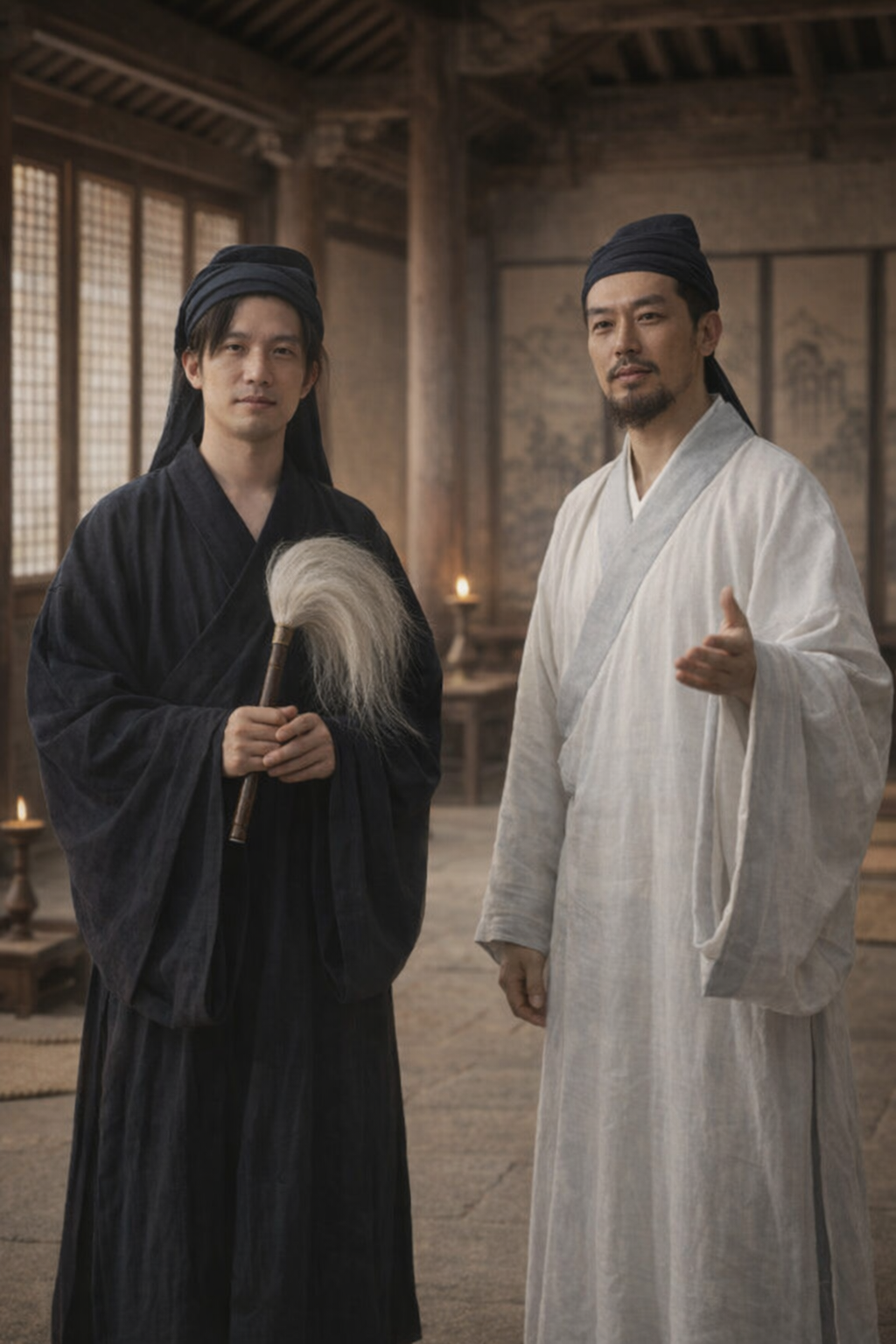
建安末年,许都。王叔明立于厅中,手执麈尾轻摇,正与谢季安论《庄子》逍遥之义。“庄生梦蝶,蝶梦庄生,孰真孰幻?“叔明声朗而缓。季安侧身微笑,袖中藏手:“若问真幻,不如问——此刻你我,可还记得昨夜那壶浊酒?“厅外竹影斜,陶灯火摇了三摇。
考据映射 · 10 条
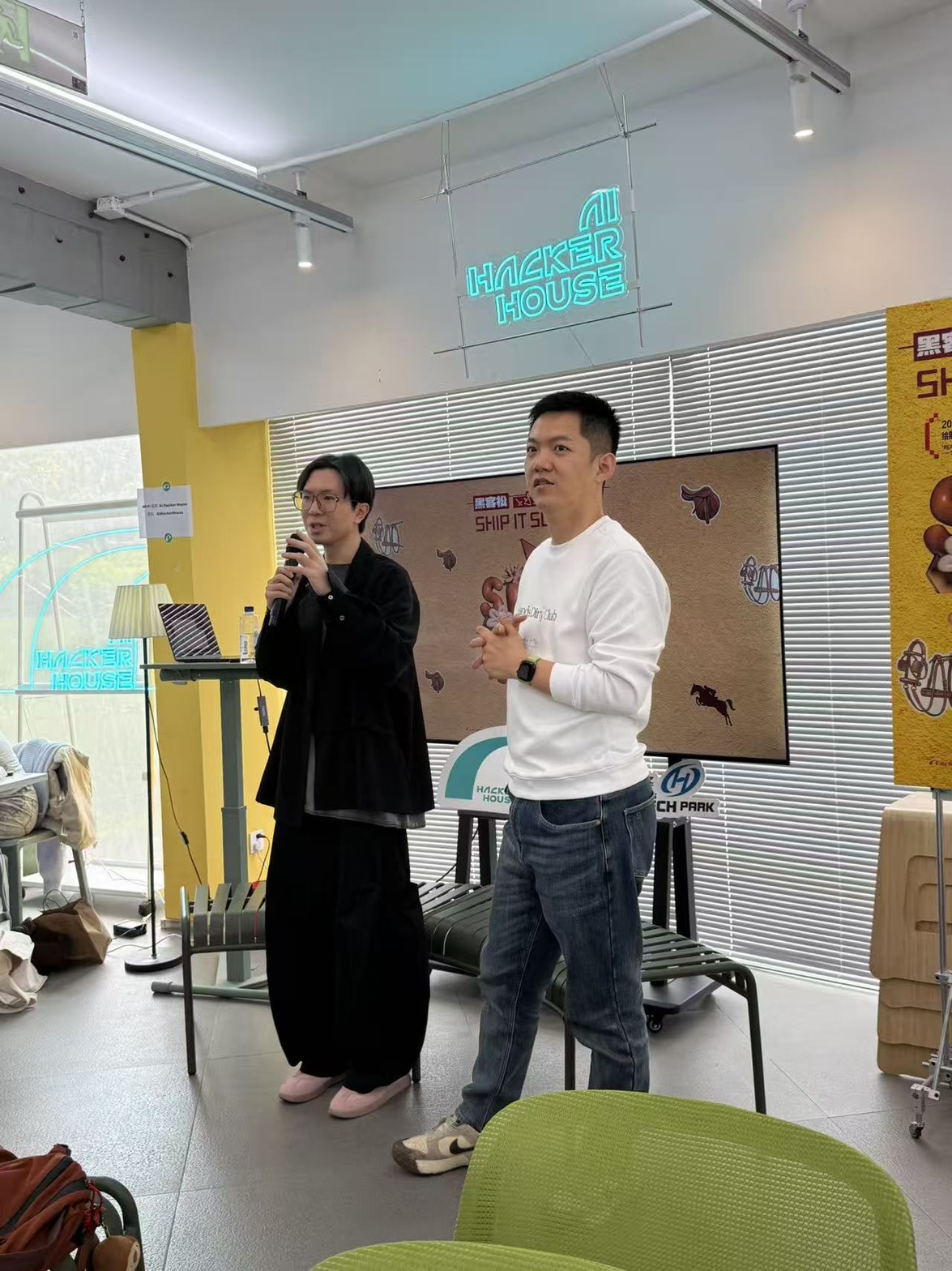
- 麦克风MODERN麈尾● 强证据
木柄或玉柄上束麋鹿(麈)尾毛的长扇形器,又名"尾扇"。柄长约 40-50 厘米,尾毛长约 20-30 厘米。魏晋清谈名士标志性持物,谈玄说理时执麈挥动,权威与风度的象征。
南京西善桥砖画王戎执麈尾,《晋书·王衍传》载清谈必持
来源:- 图像:南京西善桥南朝墓《竹林七贤与荣启期》砖画 - 文献:南朝·刘义庆《世说新语·容止》 - 文献:唐·房玄龄等《晋书·王衍传》查看图景 → - 眼镜MODERN移除移除 移除
眼镜明代才传入,魏晋无眼具
- 白色T恤MODERN大袖衫● 强证据
交领右衽宽袖长衫,袖宽可达50-60厘米,袖长过手20-30厘米,衣长及膝或过膝。多用葛布、细麻布或丝绸制成,不束腰带,任其自然下垂。
《世说新语》载名士衣褐振裾,顾恺之《洛神赋图》清晰描绘
来源:- 文献:南朝·刘义庆《世说新语·容止》 - 图像:东晋·顾恺之《洛神赋图》(宋摹本) - 文献:南朝·萧统《文选·赋》查看图景 → - 黑色长衫MODERN大袖衫● 强证据
交领右衽宽袖长衫,袖宽可达50-60厘米,袖长过手20-30厘米,衣长及膝或过膝。多用葛布、细麻布或丝绸制成,不束腰带,任其自然下垂。
交领右衽宽袖长衫,魏晋文人标志服
来源:- 文献:南朝·刘义庆《世说新语·容止》 - 图像:东晋·顾恺之《洛神赋图》(宋摹本) - 文献:南朝·萧统《文选·赋》查看图景 → - 智能手表MODERN移除移除 移除
现代电子设备,魏晋无此物
- 霓虹灯招牌MODERN移除移除 移除
现代照明,替换为自然光或陶灯
- 现代短发MODERN幅巾● 强证据
长方形丝绸或细麻布巾,长约1.5米,宽约40厘米,缠绕于头部后在额前或脑后打结,两端自然下垂或插入巾内。
《晋书·舆服志》载魏晋名士多以幅巾为雅
来源:- 文献:晋·房玄龄等《晋书·舆服志》 - 文献:南朝·刘义庆《世说新语·雅量》 - 图像:东晋·顾恺之《洛神赋图》查看图景 → - LED灯MODERN陶灯● 强证据
陶土烧制的油灯,结构为"豆形"——下有圈足,中有柱(灯杆),上为敞口浅盘(盛油与灯芯)。高约 15-30 厘米,盘径 8-12 厘米。灯油为植物油(麻油、桐油)或动物脂。灯芯用麻线、蒲心。青瓷灯至南朝尤精美。
南京象山东晋墓出土青瓷灯,豆形高足
来源:- 实物:江苏南京象山东晋王兴之墓出土青瓷灯(南京博物院藏) - 实物:安徽马鞍山朱然墓出土青瓷灯 - 文献:南朝·刘义庆《世说新语·夙惠》查看图景 → - 现代墙面MODERN夯土墙● 强证据
以黄土或红褐土分层夯实而成,层厚 8-15 厘米,层间可见水平夯线。墙高 3-8 米(宅院)至 10 米以上(城墙)。外表可抹白灰或黄土灰泥,也可裸露。墙基宽大,向上逐渐收窄。
邺城遗址夯土墙遗存,土黄深赭色
来源:- 实物:河南安阳邺城遗址夯土墙(北朝) - 实物:山西大同北魏平城遗址 - 文献:北宋·李诫《营造法式·壕寨制度》查看图景 → - 站立讲话MODERN立论讲学● 强证据
《世说新语·文学》载名士论道场景
▸ Trace 时间线 · 14 条
▸ 图像编辑 prompt · 6478 字
Photo-realistic documentary photograph, shot on Canon 5D with 85mm f/1.4 lens, natural daylight, shallow depth of field, sharp focus on faces. Edit the first input image with strict identity preservation.

🔒 FACE IDENTITY LOCK (MOST CRITICAL):
- Each person's face must remain IDENTICAL to the input image: same face shape, same eye shape and position, same nose shape, same mouth shape, same skin tone, same jaw line. The viewer must instantly recognize the same individuals.
- You MAY ADD period-appropriate features: a Wei-Jin style sparse well-groomed beard for the adult male scholar on screen-left (if appropriate for his age and role).
- You MUST NOT change: face proportions, eye color, nose bridge, lip shape, age appearance, ethnicity, fundamental facial structure.
- 🚨 NEVER replace the original face with a generic or AI-imagined face. Use the input image faces as the unchangeable identity anchor.

🔒 STANCE / POSE / COMPOSITION LOCK:
- Preserve the EXACT body pose from input: both persons standing upright. Do NOT convert to sitting or kneeling.
- Preserve the EXACT facing direction from input: both facing camera lens directly. Do NOT rotate the figures.
- Preserve relative positioning: person on screen-left holds object (replacing microphone), person on screen-right stands beside with hands naturally at sides or gesturing.
- Camera angle, distance, framing identical to input.

🔒 SCREEN-LEFT / SCREEN-RIGHT (VIEWER PERSPECTIVE):
- Every directional word (screen-left, screen-right) refers to the VIEWER's perspective — the side of the frame as a viewer sees it on screen. NOT the depicted person's anatomical own-left or own-right.
- Always say screen-left / screen-right. Never say bare left / right alone.

🔒 NARRATIVE SERVES POSE:
- Input shows two men standing upright facing camera in presentation/lecture posture. Write a Wei-Jin equivalent: scholarly lecture or philosophical debate scene. Do not invent activities the input does not show.

Keep the exact composition, same number of people, same poses and body positions, same left/right positioning. Only replace clothing, objects, and background elements as specified below.

PERSON ON SCREEN-LEFT (occupies left half of viewer's frame; original wears black long shirt and holds microphone, has eyeglasses):
  - Face: identical to input (identity anchor)
  - Facing direction: facing camera lens directly (viewer perspective)
  - REMOVE: eyeglasses (魏晋无眼镜), any modern accessories (smart watch if visible, earphones, modern jewelry, hair dye, modern footwear)
  - Replace clothing with wide-sleeved robe (daxiushan), cross-collar right lapel, extremely wide sleeves 50-60cm across extending 20-30cm past hands, knee-length or longer, lightweight kudzu or silk fabric in black or dark blue, loose fit without belt, flowing and elegant scholar's garment
  - Replace microphone with deer-tail whisk (zhuwei), wooden or jade handle 40-50cm long bound with soft pale grey or cream-white long fur, fan-shaped silhouette, held vertically before chest
  - Replace modern hairstyle with scholar's head wrap (fujin), rectangular silk cloth 1.5m long wrapped loosely around head with knot at forehead or back, ends hanging naturally, black or dark blue color
  - Position: stays on screen-left side of frame, standing upright

PERSON ON SCREEN-RIGHT (occupies right half of viewer's frame; original wears white T-shirt, short hair):
  - Face: identical to input (identity anchor)
  - Facing direction: facing camera lens directly (viewer perspective)
  - REMOVE: any modern accessories present (smart watch if visible, eyeglasses if any, earphones, modern jewelry, modern footwear)
  - Replace clothing with wide-sleeved robe (daxiushan), cross-collar right lapel, extremely wide sleeves 50-60cm across extending 20-30cm past hands, knee-length or longer, lightweight kudzu or silk fabric in white or pale blue, loose fit without belt, flowing and elegant scholar's garment
  - Replace modern hairstyle with scholar's head wrap (fujin), rectangular silk cloth wrapped loosely around head with knot at forehead or back, ends hanging naturally, black or dark blue color
  - Position: stays on screen-right side of frame, standing upright, hands naturally at sides or gesturing in scholarly debate manner

BACKGROUND REPLACEMENT (CRITICAL):
- Remove all: neon signs ("HACKER HOUSE" text), LED screens, fluorescent lights, modern furniture, printed posters, modern logos, English text, Chinese simplified text, modern wall paint, modern flooring.
- Replace background with traditional Wei-Jin Chinese interior hall (tingtang): timber-pillared main room with exposed beam ceiling, tamped earth or grey-tile floor in earth-yellow to grey tones, northern wall with folding screen (pingfeng) backdrop showing painted mountain-water landscapes or historical figures in muted earth tones (dark lacquer frame, silk surface), wooden lattice windows (zhilingchuang) with vertical wood bars letting soft natural light filter through, low platforms with woven floor mats (xi) visible at sides, ink-painted folding screens in muted earth tones (ochre, dark blue, black ink), simple wooden bracket sets (dougong) atop timber columns, rammed-earth walls in yellow-ochre to reddish-brown with visible horizontal layer lines.
- Add period lighting: ceramic oil lamps (taodeng) on low wooden stands, tall-stemmed dou-shape pottery lamps with shallow bowl holding vegetable oil and hemp wick, small yellow-orange flame, soft warm dim glow.

LIGHTING & ATMOSPHERE:
- Lighting: soft natural daylight from paper-screened windows (zhilingchuang), warm tone filtering through vertical wooden slats, gentle shadows on tamped earth floor. Supplemented by dim warm glow from ceramic oil lamps placed on low wooden stands at sides.
- Atmosphere: quiet scholarly lecture hall or philosophical debate chamber, serene intellectual retreat, NOT theatrical, NOT staged, NOT modern auditorium.

STYLE: Photo-realistic documentary photography, NOT painting, NOT illustration, NOT digital art, NOT anime, NOT Chinese ink wash, NOT oil painting. Wei Jin Northern Southern dynasties (220-589 AD) China. CRITICAL: NO chairs (everyone stands or sits on floor mats), NO Tang/Song/Ming/Qing elements, NO Japanese kimono, NO Korean hanbok, NO chili peppers, NO tomato, NO cotton fabric, NO folding fans, NO blue-and-white porcelain, NO modern footwear, NO eyeglasses, NO smart watches, NO neon, NO LED. Faces must remain unchanged from input image.